Since 1 May 2026, there's only one way to put the rent up on a periodic tenancy in England: a Section 13 notice. Rent review clauses in tenancy agreements no longer count, and every tenant can challenge an increase at the First-tier Tribunal if they think it's above market rent.
Most landlords will never see the inside of a tribunal. But the ones who do tend to come out worse than they expected. An analysis by LonRes of 200 recent tribunal decisions found that 73% set the rent below what the landlord proposed, with a typical cut of 7.5%. And because the tribunal can no longer set the rent higher than the landlord asked for, a tenant has very little to lose by trying.
So the question isn't really "can I raise the rent?" It's "can I raise it in a way that holds if it's challenged?" This guide covers the rules, the evidence that matters, and the mistakes that cost landlords months of the increase.
The Section 13 rules in 2026
- Once a year. You can use a Section 13 notice once every 52 weeks. You can't use one in the first 52 weeks of a tenancy, or within 52 weeks of the last increase.
- Two months' notice. The new rent can't start earlier than two months after the notice is served (it used to be one month). See our guide to periodic tenancy notice periods for the others.
- The right form. The notice must be on the prescribed form, Form 4A. A letter or email saying "your rent is going up" isn't enough on its own.
- The tenant can challenge. Before the start date, the tenant can refer the notice to the First-tier Tribunal (Property Chamber). The tribunal decides the open market rent for the property.
- No higher than you asked. The tribunal can agree your figure or set a lower one, but it can no longer set the rent above the amount in your notice.
- No backdating. If the tenant challenges, the new rent starts from the date in the tribunal's decision, not from the date in your notice. The tribunal can also delay the start by up to two months if paying it straight away would cause the tenant undue hardship.
Why a challenge costs more than the rent cut
The 7.5% cut is the headline, but the delay is often what hurts. In the LonRes sample, the median wait from application to decision was about 14 weeks, and 20 weeks in London. None of that time is backdated.
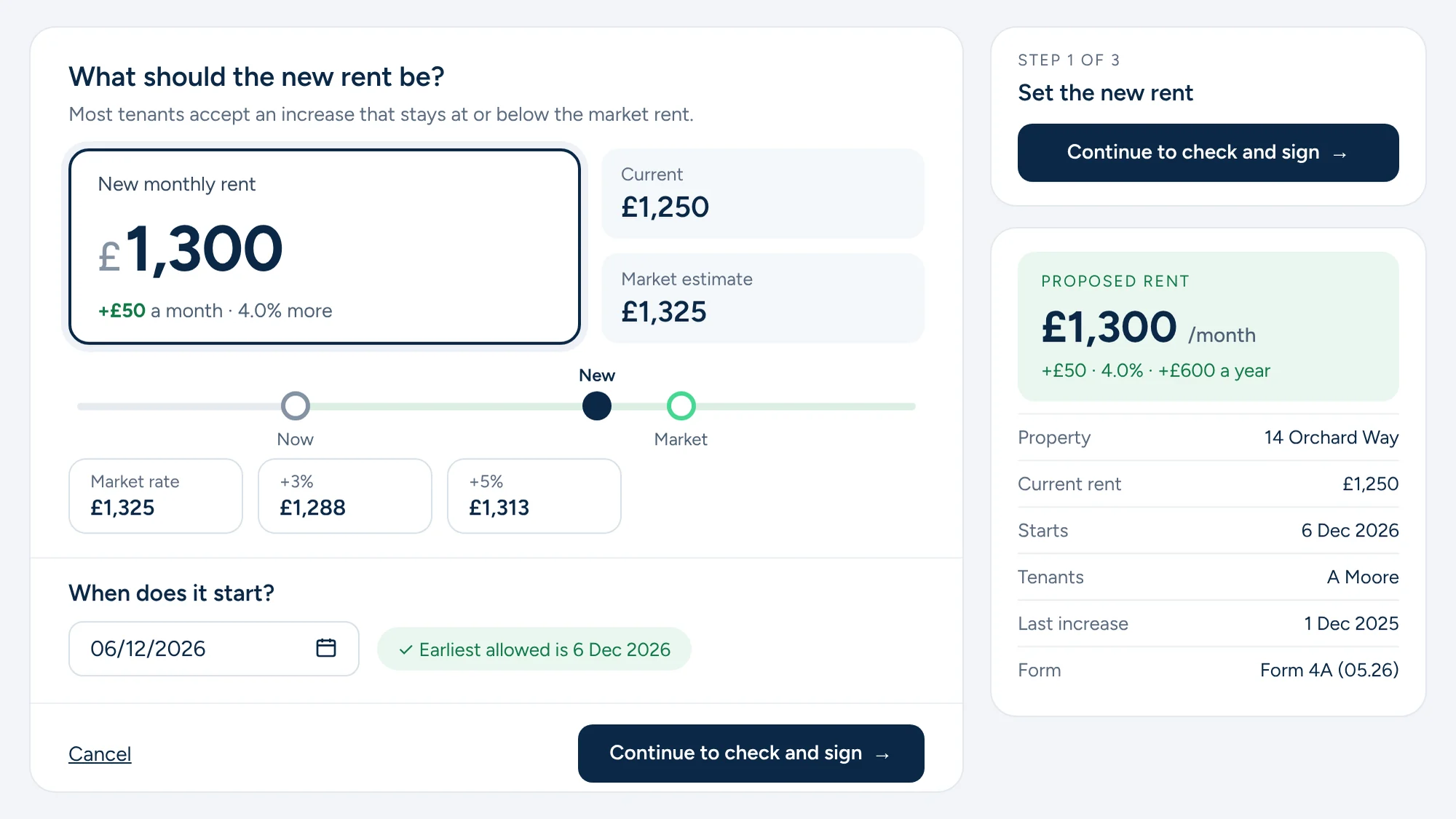
Say you propose taking a rent from £1,250 to £1,300 a month. If the tenant challenges and the tribunal agrees with you after 14 weeks, you've still lost over three months of the extra £50. If the tribunal cuts it, you've lost part of the increase for the whole year as well. Either way, the next increase is pushed back too, because the 52-week clock restarts.
The better plan is a notice that's hard to argue with in the first place.
What the tribunal actually looks at
The same analysis found that nearly half of the decisions recorded a problem with the evidence. In 39% of cases, the tribunal fell back on its own knowledge of the local market, and in 21%, at least one side gave no evidence at all. If you don't make the case for your figure, the tribunal makes it for you.
What carries weight:
- Achieved rents on genuinely comparable properties. Same area, similar size, type and condition. What a property actually let for counts for far more than what it's advertised at.
- The property as it is now. Improvements you've made, and the condition it's in, both matter. So does anything the tenant has done to it, which the tribunal will usually disregard.
- A sensible figure. An increase that sits at or a little below the market rent for comparable homes is much harder to challenge than one that reaches for the top of the range.
What carries little weight:
- Asking prices on portal listings.
- Your own costs going up (a higher mortgage rate or insurance bill isn't evidence of market rent).
- "Everyone else is putting their rent up."
A simple checklist before you serve
- Check the date. Has it been at least 52 weeks since the tenancy started or since the last increase? Work out the earliest start date from that, then add the two months' notice.
- Check the market. Look at what comparable properties nearby are actually renting for, and keep a note of what you looked at and when.
- Pick a figure you can defend. If your rent is well below market, it may be better to close the gap over two years than in one large step that invites a challenge.
- Use Form 4A and fill in every section, including the start date of the new rent.
- Serve it properly and keep proof of how and when it was served.
- Talk to your tenant. A short, friendly explanation alongside the notice, with the market evidence, heads off a lot of challenges before they start.
How Alphaletz AI helps
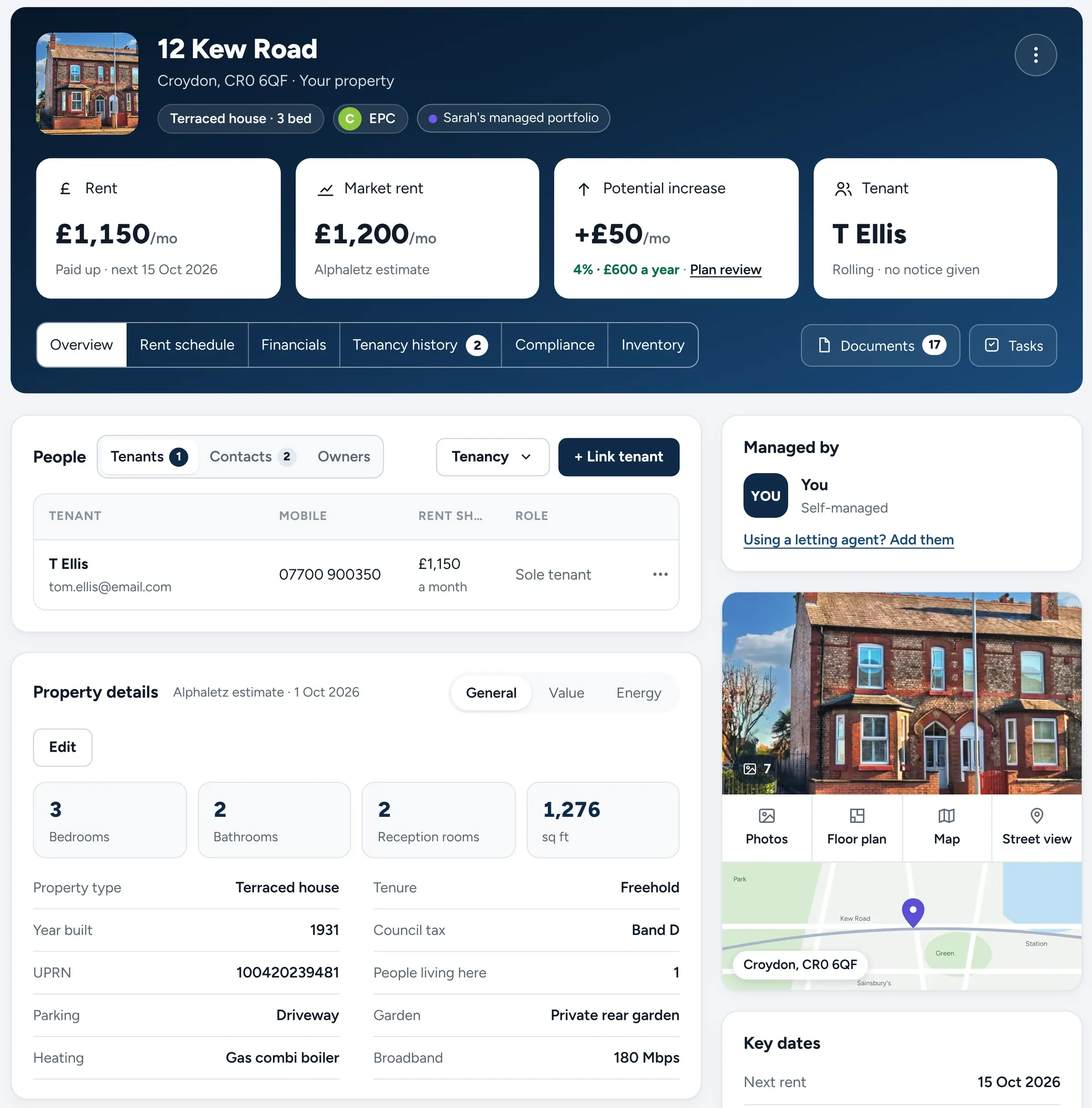
Alphaletz pulls in property data for more than 30 million UK homes, including market rents, and keeps it up to date automatically. So every property in your portfolio sits next to what the market says it should be renting for, and you can see at a glance which rents have fallen behind.
- Each rent against the market. See the current rent, the market rent and the gap, property by property.
- Pick an increase and the notice is prepared. Form 4A is filled in for you, with the earliest start date worked out.
- Dates checked. The two months' notice and the 12-month rule are checked before anything goes out, which is where a lot of notices go wrong.
- Serve it your way, by email, post or by hand, with a record kept against the tenancy.
- Everything in one place. The rent history, the notice and the market data you based it on all sit on the property record if a tenant ever does challenge.
It adds up quickly. The £1,250 to £1,300 increase above is £600 a year from one property. That's more than a year of the Landlord plan, which starts at £12 a month for five properties.
Alphaletz is built by landlords who manage their own portfolios, and Section 13 is one of the jobs we wanted to stop dreading every year. Customers report saving up to 75% of their admin time, and rent reviews are a big part of that.
Questions landlords ask
How often can a landlord increase the rent?
Once every 52 weeks, using a Section 13 notice. You can't increase it in the first 52 weeks of a tenancy, or within 52 weeks of the last increase.
How much notice do I need to give for a rent increase?
At least two months. The new rent can't start earlier than two months after the notice is served.
Can the tribunal increase the rent above what I asked for?
No. Since 1 May 2026 the First-tier Tribunal can agree your figure or set a lower one, but it can't set the rent higher than the amount in your notice.
Is the new rent backdated if the tenant challenges?
No. If the tenant refers the notice to the tribunal, the new rent starts from the date in the tribunal's decision, which can be several months after the date in your notice.
This guide covers assured periodic tenancies in England from 1 May 2026. It's general information, not legal advice. If your situation is unusual, or a tenant has already challenged an increase, take advice from a solicitor or your landlord association.
Next steps
Join a free webinar to see a rent increase prepared from start to finish, or if you manage 10 or more properties, book a 15-minute demo.