Every landlord and letting agent makes decisions that depend on knowing what's happening in the wider market: what similar properties are renting for, whether a property's EPC rating is about to become a problem, what a tenant's likely heating costs are. The trouble is, that information usually lives somewhere else entirely: a valuation site, the EPC register, a broadband checker, three tabs open just to answer one question about one property.
Alphaletz now pulls this data in directly (market rents, sales history, EPC ratings, council tax bands, broadband speeds, parking, heating type and estimated monthly heating costs) across more than 30 million UK residential properties, attached to every property record you manage.
Why this matters for landlords
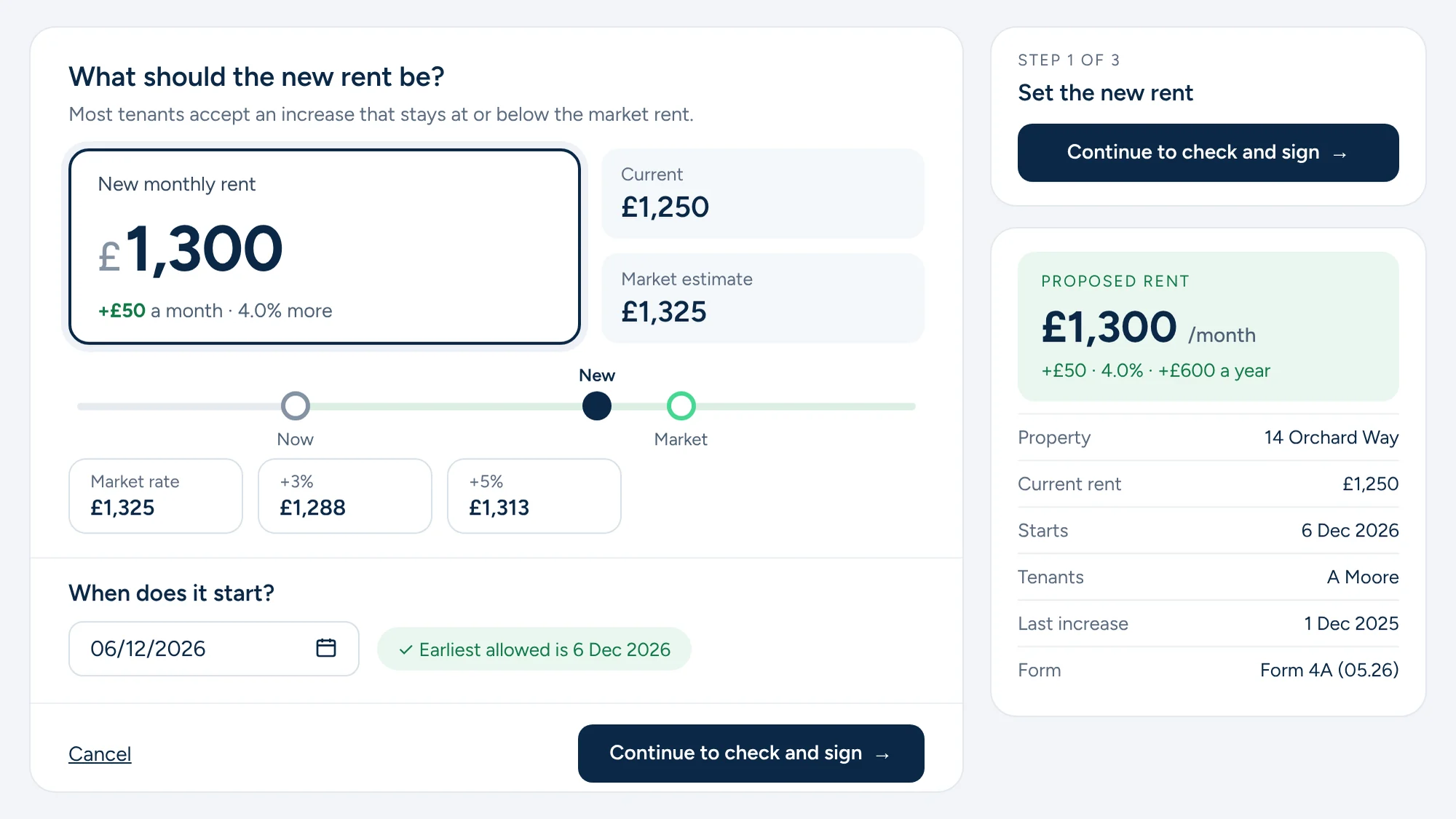
Setting the right rent is a legal question too. Under the Renters' Rights Act, rent increases go through a formal Section 13 process, and a tenant who believes a proposed rent is above the open market rate can refer it to the First-tier Tribunal for £47, with nothing to lose by trying, since the rent can never be set higher than the landlord proposed. Genuine comparable-property data is the evidence that supports a rent increase if a tenant does challenge it.
EPC compliance stops being a surprise deadline. A valid EPC rating of at least E is currently required before a property can be let, and under the Warm Homes Plan that minimum rises to C from 1 October 2030, for new and existing tenancies. Seeing a property's current rating clearly, well ahead of time, turns this into a plannable upgrade programme rather than a scramble in 2030.
Tenant costs affect tenant decisions. Heating type and estimated monthly heating costs increasingly shape whether a prospective tenant chooses one property over another. Being able to state this clearly makes for a better letting and fewer early move-outs.
Investors can see which properties are working hardest. Combining a property's current market value with its rental income makes it possible to calculate yield property by property. For a portfolio built up over years, that's often the first time it's obvious which properties are outperforming and which are underperforming relative to what they're worth.
Why this matters for agents
Valuations get faster and more defensible. When a landlord asks how you arrived at a suggested rent, "here's what's happening on comparable properties in this postcode" is a far stronger answer than instinct, and it builds trust with landlords comparing you to other agencies.
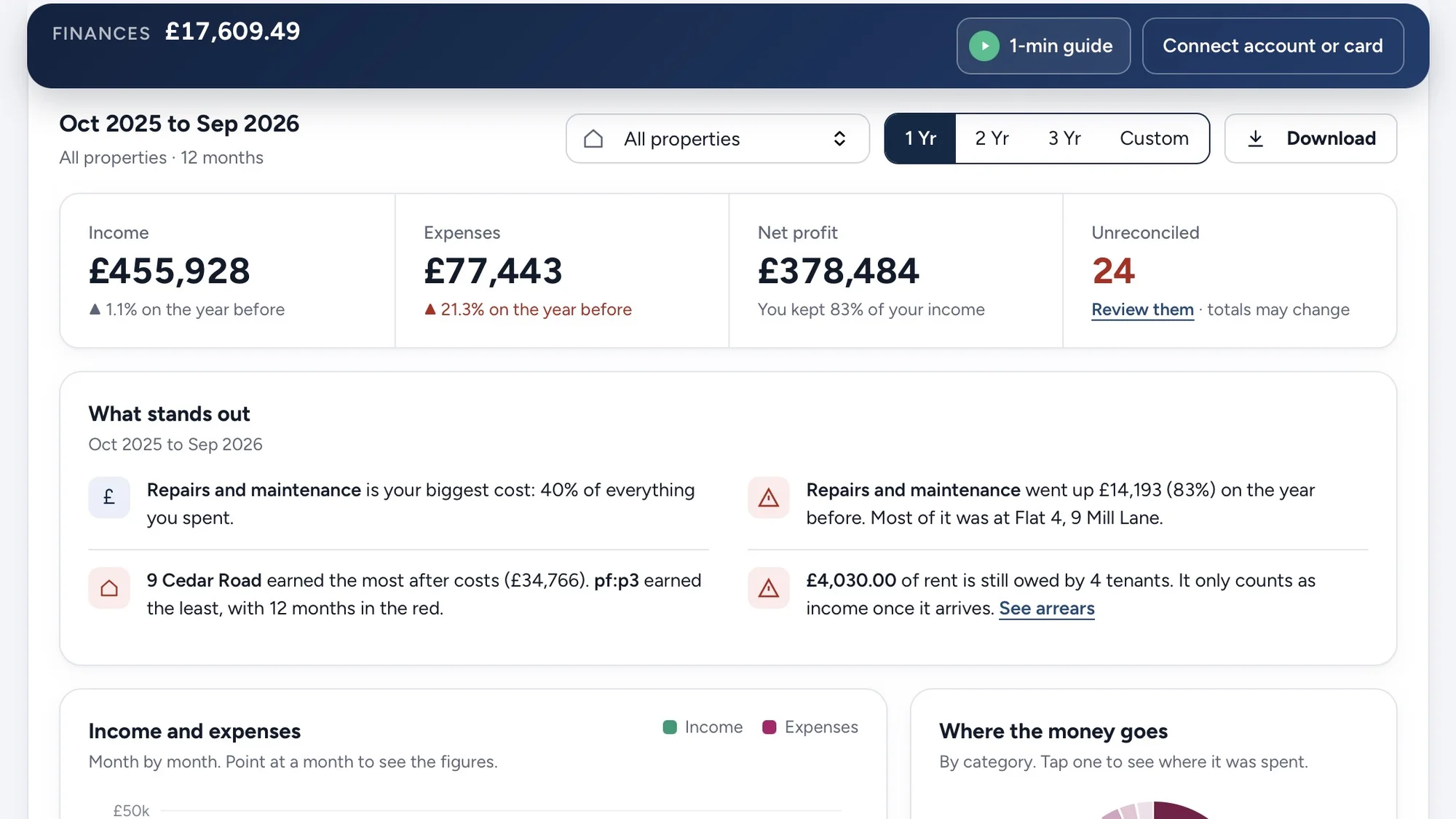
Portfolio-wide insight, not property-by-property lookups. Agents managing dozens or hundreds of properties can see market context across the whole portfolio, which is useful for annual rent reviews, spotting underperforming properties, or flagging EPC risk across a landlord's entire holding in one pass.
It's a selling point to prospective landlord clients. Agencies competing for new business can point to data-backed valuations and market insight as part of the pitch.
Data where the work already happens
The value isn't the data existing. Market data is available elsewhere, scattered across different sites and registers. The value is having it sit directly against the property record you're already working from, so a rent review, a compliance check or a conversation with a landlord doesn't require leaving Alphaletz to piece the picture together.
Next steps
Free for your first property, or watch our 15-minute demo of the new Alphaletz system.