Section 21 has gone. Since 1 May 2026, every landlord in England who needs a property back has to use Section 8, and give the court a reason, known as a ground, backed by evidence. Landlords rushed to use Section 21 before the deadline: Ministry of Justice figures for July to September 2026 show landlord possession claims up 21% on a year earlier, with accelerated (Section 21) claims up 68%. The Law Society has warned that courts aren't resourced for the rise, and the average landlord claim already takes about 26 weeks to reach repossession.
So the landlords who get their properties back fastest from here on won't be the ones who move quickest. They'll be the ones whose notice is right first time and whose paperwork is ready before they need it. This guide covers how Section 8 works now, the grounds you're most likely to use, and the evidence a judge will expect.
What changed on 1 May 2026
- No more Section 21. You can't end a tenancy without a reason. Section 21 notices served before 1 May had to reach court by 31 July 2026.
- All tenancies are periodic. Fixed terms have gone, so there's no "end of the tenancy" to wait for. See our guide to periodic tenancy notice periods.
- New and stricter grounds. New grounds let you sell or move in, but with longer notice and a 12-month protected period. The rent arrears ground needs more arrears than before.
The Section 8 grounds most landlords will use
| Ground | Reason | Type | Minimum notice |
|---|---|---|---|
| 1 | You or close family will move in | Mandatory | 4 months |
| 1A | You're selling the property | Mandatory | 4 months |
| 8 | Serious rent arrears (3 months, or 13 weeks if paid weekly or fortnightly) | Mandatory | 4 weeks |
| 10 | Some rent is unpaid | Discretionary | 4 weeks |
| 11 | Persistent late payment | Discretionary | 4 weeks |
| 12 | Breach of the tenancy (other than rent) | Discretionary | 2 weeks |
| 14 | Nuisance, annoyance or criminal use | Discretionary | Immediate |
| 7A | Serious antisocial behaviour or criminal conviction | Mandatory | Immediate |
Mandatory means the court must give you possession if you prove the ground. Discretionary means the judge decides whether it's reasonable, so the quality of your evidence matters even more.
Rent arrears: Grounds 8, 10 and 11
Most possession claims are about rent. Ground 8 now needs at least three months' rent owing (up from two), or 13 weeks if rent is paid weekly or fortnightly, and the notice period is four weeks. The arrears must be at that level both when you serve the notice and on the day of the hearing. If the tenant pays enough to drop below it, Ground 8 fails.
That's why most landlords cite Grounds 10 and 11 alongside Ground 8. They're discretionary, but they still stand if the arrears fall. Ground 11 relies on a pattern of late payment, which you can only show with a dated record of every payment and every reminder.
Selling or moving in: Grounds 1 and 1A
- You must give at least four months' notice.
- You can't use them to take possession in the first 12 months of a tenancy.
- Once you've relied on them, you can't re-let or market the property to let for 12 months after the notice ends. Doing so can lead to serious penalties.
Serving the notice correctly
- Use the current Form 3A. Older versions, and Form 3, aren't valid for private tenancies. Include the full wording of each ground you rely on.
- Serve every named tenant, using a method allowed by the tenancy agreement, and keep proof of how and when you served it.
- The longest notice period applies. If you combine grounds, the notice runs to the longest one. Ground 7A or 14 lets you start proceedings straight away.
- Check the deposit is protected. For most grounds, the court can't make a possession order if the deposit isn't in an approved scheme.
- Watch the 12-month window. A notice stays valid for 12 months from service. After that you'll need a new one.
The evidence a court will expect
With courts busy, a claim that's missing something can be adjourned and lose weeks. Have these ready before you serve notice, not after:
- The tenancy agreement, or written statement of terms, and the Renters' Rights Information Sheet you gave the tenant.
- Deposit protection certificate and prescribed information.
- A rent statement showing every charge, every payment and the running balance.
- Copies of every reminder, letter and call note, with dates.
- The notice itself and proof of service.
- Current safety certificates: gas safety, EICR and EPC.
- For other grounds, the evidence for that ground: photos, complaints, sale or move-in plans.
How Alphaletz helps you get possession-ready
Alphaletz won't serve a Section 8 notice for you, and it's no substitute for legal advice. What it does is keep the evidence a court asks for up to date as you go, so it's there the day you need it.
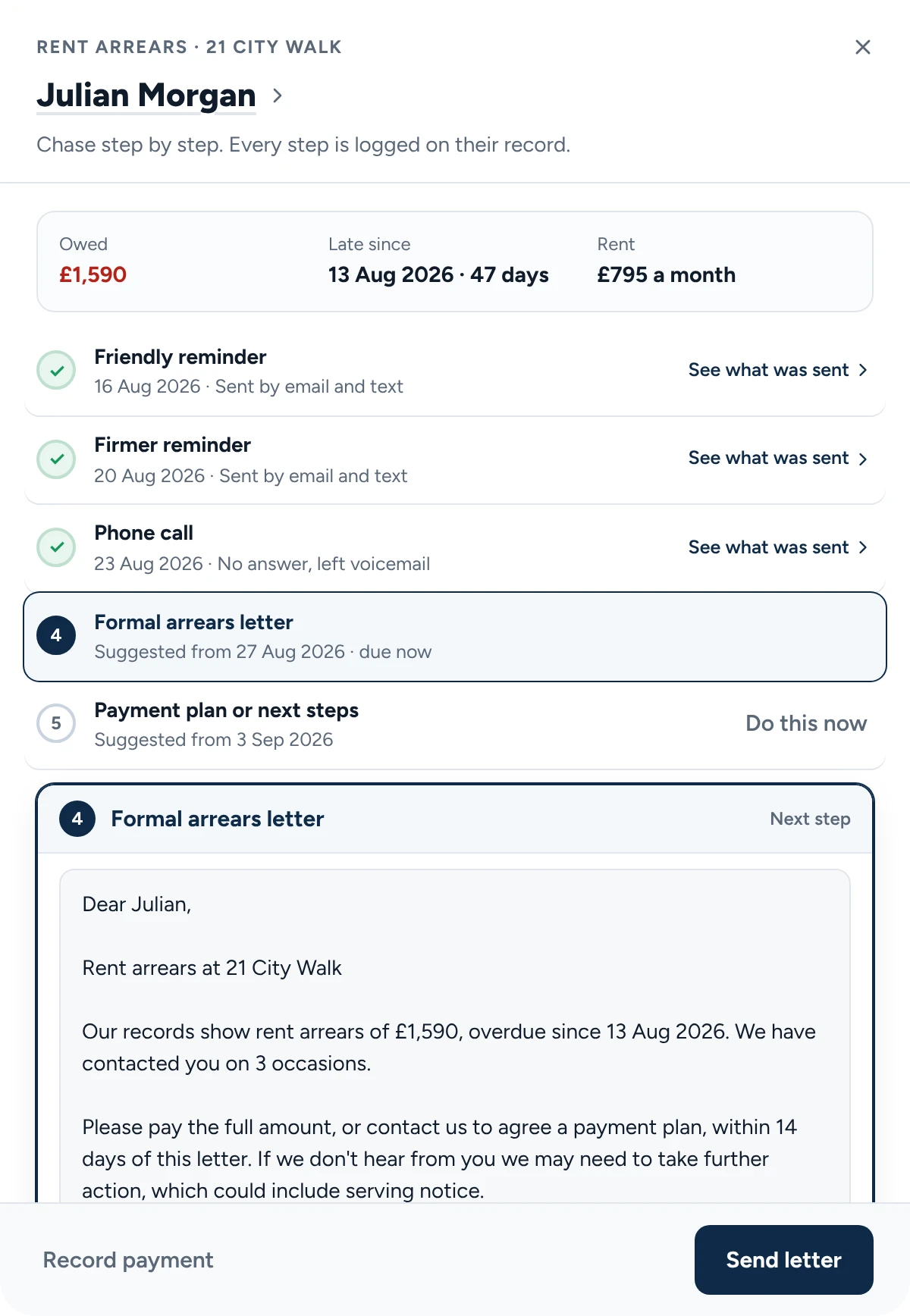
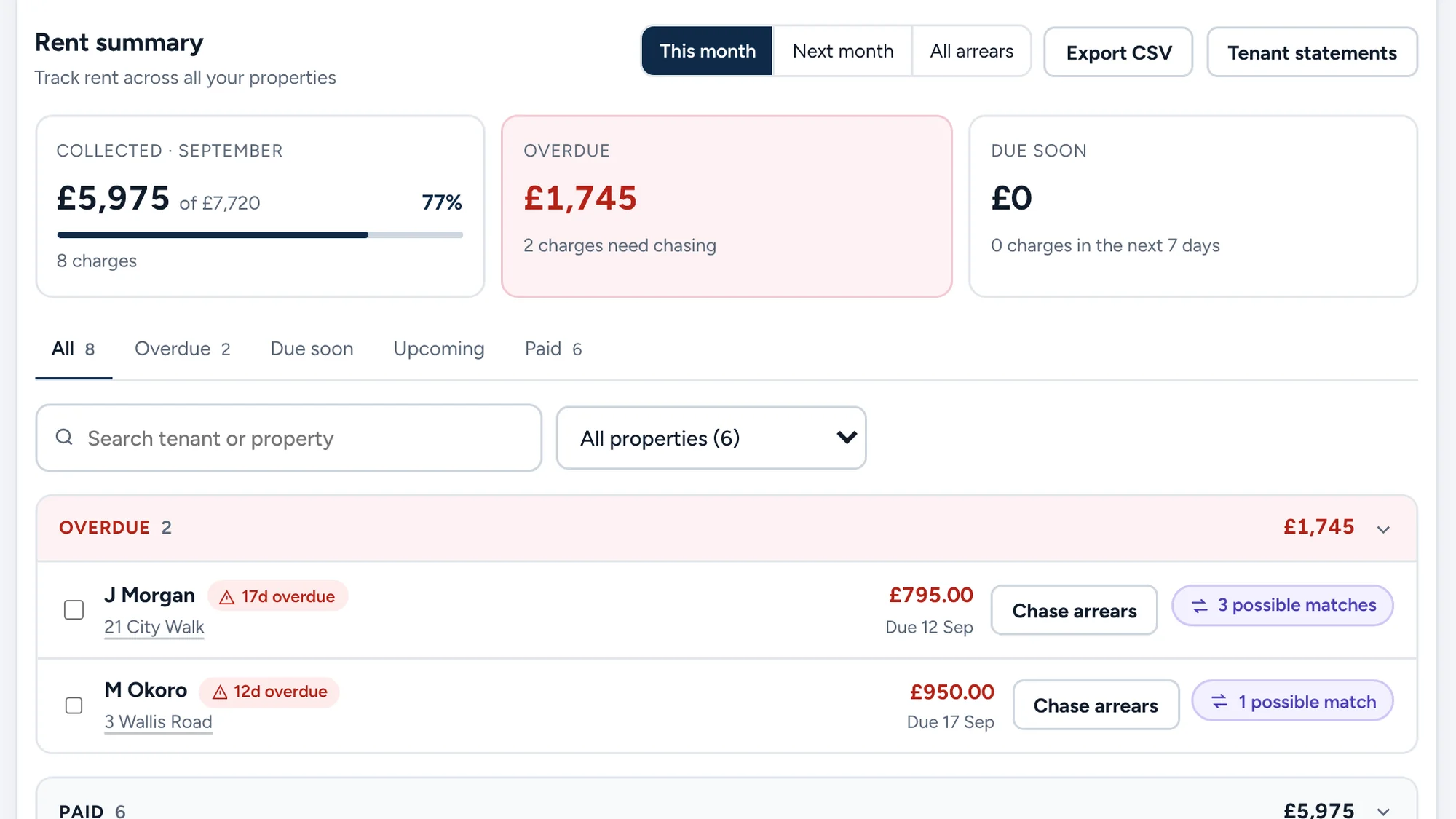
- Arrears spotted the day rent is late. Bank feeds match rent as it lands, so missed payments show straight away and the running balance is always current.
- Every chase step logged. Reminders go out step by step, calls are logged, and formal letters wait for your go-ahead. That dated trail is what supports Grounds 10 and 11.
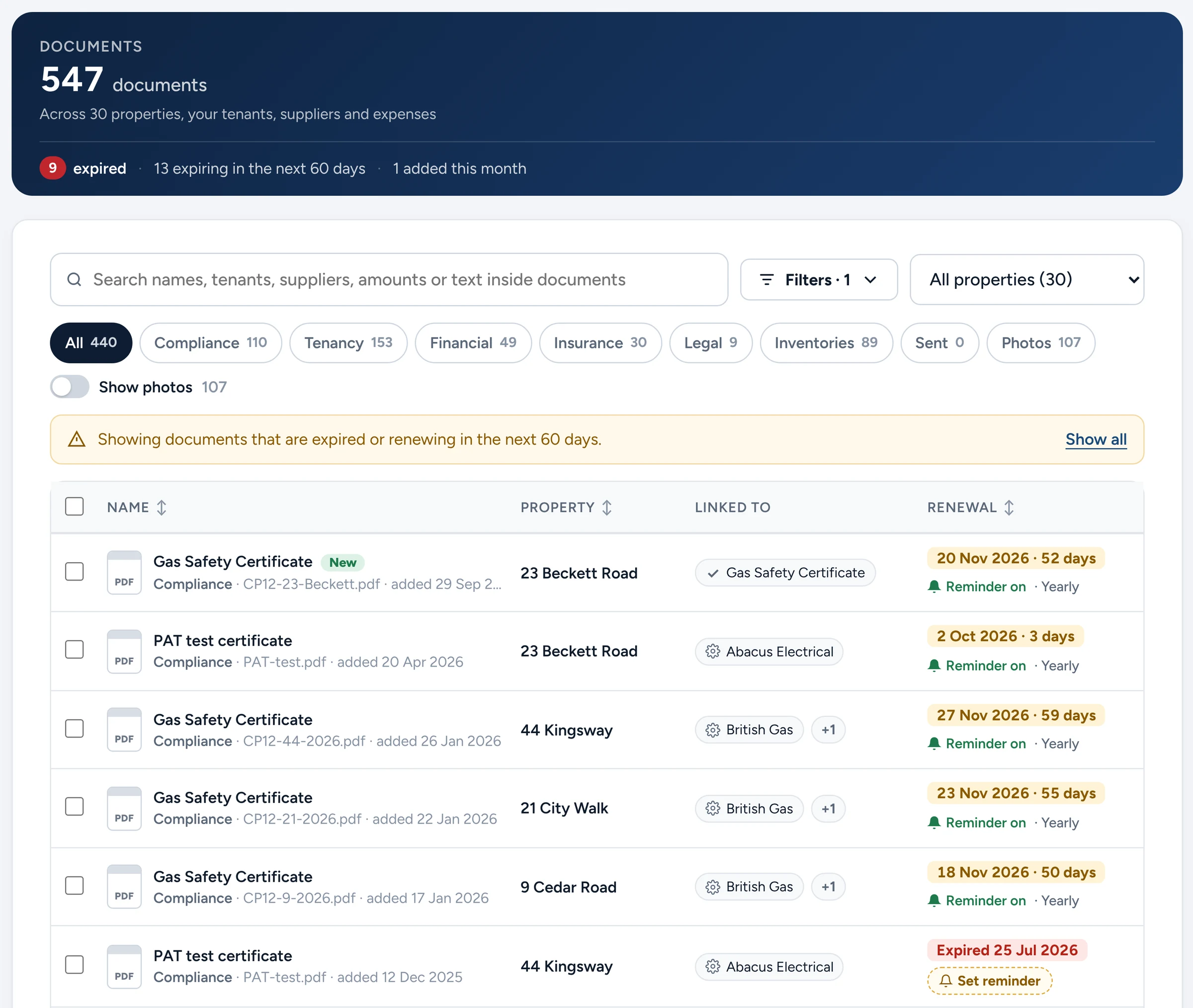
- Compliance Guard. Deposits, gas, EICR, EPC, licences and Renters' Rights information are tracked on one screen, and you can download a compliance pack in a click.
- A full audit log. See who changed what, and when, on every record.
See how arrears chasing works in Alphaletz.
Questions landlords ask
Can I still use Section 21 in England?
No. Section 21 was abolished on 1 May 2026. Notices served before then had to reach court by 31 July 2026, so every new possession claim now goes through Section 8.
Which form do I use for a Section 8 notice?
Form 3A, the current version for private landlords. Older versions, and Form 3, aren't valid for private assured tenancies. Include the full wording of every ground you rely on.
How much rent arrears do I need for Ground 8?
At least three months' rent, or 13 weeks' rent if it's paid weekly or fortnightly. The arrears must be at that level both when you serve the notice and at the hearing.
How long is a Section 8 notice valid?
You have 12 months from the date you served it to start court proceedings. After that you need to serve a new notice.
How long does it take to get a property back?
Recent court figures put the average time from a landlord's claim to repossession at about 26 weeks, on top of the notice period. Clear evidence and a correct notice are the best way to avoid adding to that.
This guide covers private assured tenancies in England from 1 May 2026. It's general information, not legal advice. For a specific case, speak to a solicitor or your landlord association before serving notice.
Next steps
Free for your first property, or watch our 15-minute demo of the new Alphaletz system.