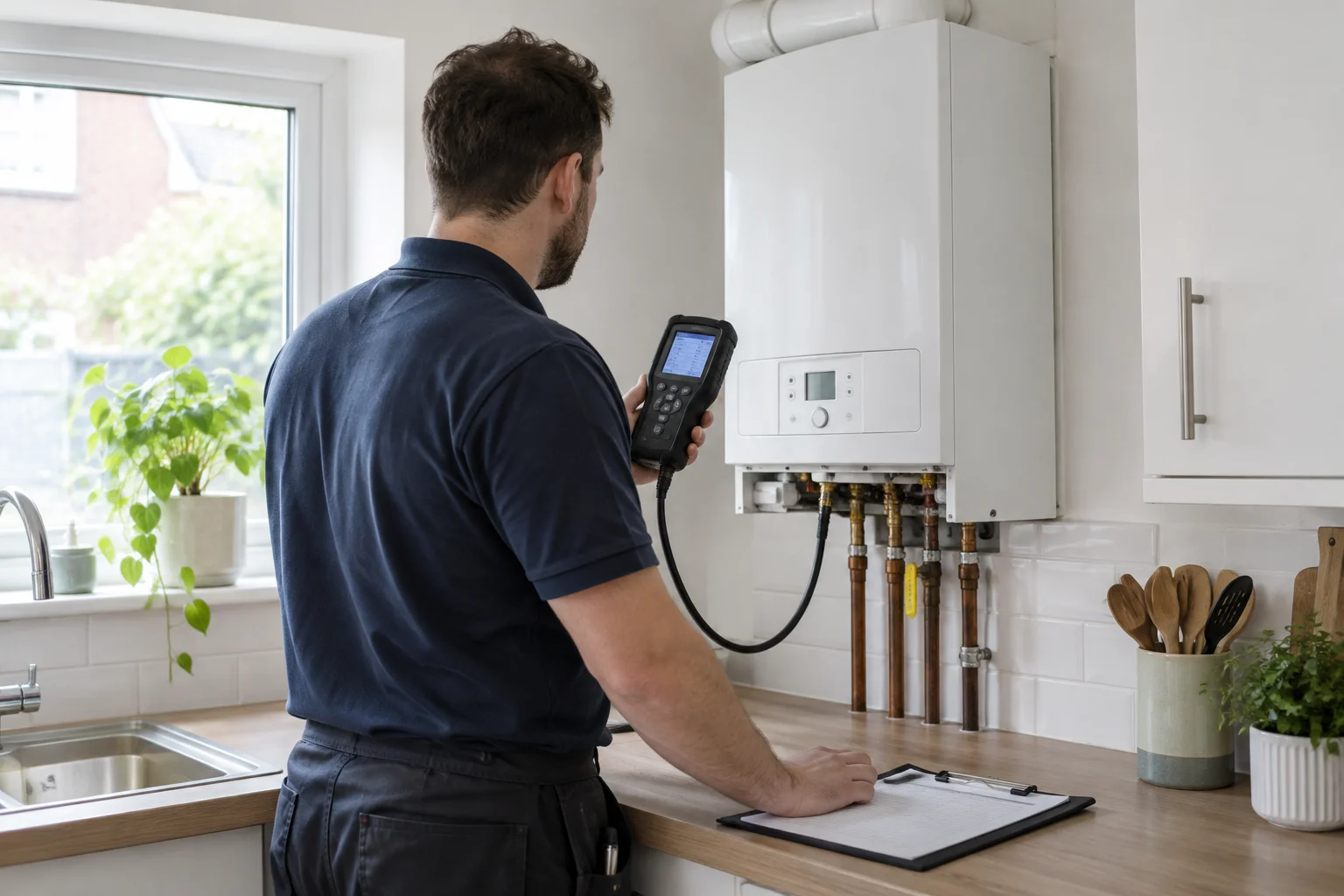
Every rented home in England needs a handful of safety checks, and each one comes with its own renewal date, its own paperwork for tenants and its own fine if it's missed. Keeping track of them across several properties is where most landlords slip up, not in the checks themselves.
There's another reason to get your paperwork in order now. From 15 December 2026, landlords start registering their properties on the government's new Register your rental property service, region by region. You'll need your gas safety, electrical safety and EPC details to hand when you do.
Here's what you need, how often, and what to give your tenants.
The checklist at a glance
| Check | How often | Give tenants a copy |
|---|---|---|
| Gas safety record (CP12) | Every 12 months | Within 28 days of the check, and before a new tenant moves in |
| Electrical safety report (EICR) | At least every 5 years | Within 28 days of the inspection, and before a new tenant moves in |
| Energy Performance Certificate (EPC) | Every 10 years, minimum rating E | Before you let the property |
| Smoke alarms | Checked on the first day of every tenancy | Not needed |
| Carbon monoxide alarms | Checked on the first day of every tenancy | Not needed |
| Legionella risk assessment | Review regularly, and when anything changes | Not needed |
Gas safety: every 12 months
If the property has any gas appliances, flues or pipework you provide, a Gas Safe registered engineer has to check them every year. You'll get a gas safety record, often called a CP12.
- Give your existing tenants a copy within 28 days of the check, and new tenants a copy before they move in
- You can have the check done up to two months early and keep the original renewal date, so your dates don't creep forward each year
- Keep each record for at least two years
- Appliances a tenant owns aren't your responsibility, but the pipework and flues that serve them are
Gas safety is the one area where failure is a criminal offence, prosecuted by the Health and Safety Executive. It's also the check most often missed when a property changes hands or a renewal date slips.
Electrical safety: at least every 5 years
A qualified electrician has to inspect and test the fixed wiring, sockets, fuse box and light fittings at least every five years, or sooner if the last report says so. You'll get an Electrical Installation Condition Report (EICR).
- Give existing tenants a copy within 28 days of the inspection, and new tenants a copy before they move in
- Give a copy to a prospective tenant within 28 days of them asking, and to the council within 7 days of a request
- If the report needs remedial work, it has to be done within 28 days, or sooner if the report says so. Then send the tenant and the council written confirmation from the electrician
Councils can fine landlords up to £40,000 for breaching the electrical safety rules.
PAT testing of appliances you provide isn't a legal requirement for most single lets, but it's good practice and some HMO licences require it.
Energy Performance Certificate (EPC)
You need a valid EPC before you market or let the property, and you must give the tenant a copy. An EPC lasts 10 years.
The minimum rating to let a home in England and Wales is currently E. That's changing. The government has confirmed that from 1 October 2030 every privately rented home will need to reach EPC C or have a registered exemption, whether the tenancy is new or existing. The most a landlord will have to spend per property is capped at £10,000, and improvements made since October 2025 count towards it.
If any of your properties are rated D or below, now is a good time to find out what it would take to reach C, while there's time to plan the work around tenancies.
Smoke and carbon monoxide alarms
Since October 2022, landlords in England must:
- fit at least one smoke alarm on every storey with a room used as living accommodation
- fit a carbon monoxide alarm in any room with a fixed combustion appliance, such as a gas boiler or wood burner (gas cookers aren't included)
- check every alarm works on the first day of each new tenancy
- repair or replace any alarm once a tenant tells you it's faulty
Councils can fine up to £5,000 for not complying. A simple habit helps: test the alarms at check-in, note it in the inventory and ask the tenant to sign it.
Legionella risk assessment
There's no certificate for legionella, but you do have to assess the risk from the water system and keep it under control. For most homes that's a simple check you can do yourself, such as making sure the hot water is stored hot enough and there are no little-used pipes where water sits. Write it down, date it and review it when anything changes.
If you let an HMO
Houses in multiple occupation carry extra duties on top of the checklist above, including fire doors, fire alarms and emergency lighting, plus whatever conditions your licence sets. Check your licence and your council's HMO standards for the full list.
Furniture
If you let a property furnished, any upholstered furniture you provide must meet the fire safety rules and carry the permanent label to show it. Old sofas without labels are a common problem in furnished lets.
Keep the paperwork where you can find it
Three things catch landlords out: a renewal date that slips by, a certificate that never made it to the tenant, and not being able to show the council or a tribunal that you did either. Keep every certificate, the date you sent it to the tenant and the date the next one is due, for every property, in one place.
The start of a tenancy is the easiest time to get this right. Sending the tenant every certificate together, with a welcome pack that explains who to contact and what to do in an emergency, means the paperwork is done on day one and you have a record that it went.
How Alphaletz helps
Alphaletz keeps every property's compliance in one place, so nothing runs out without you knowing.
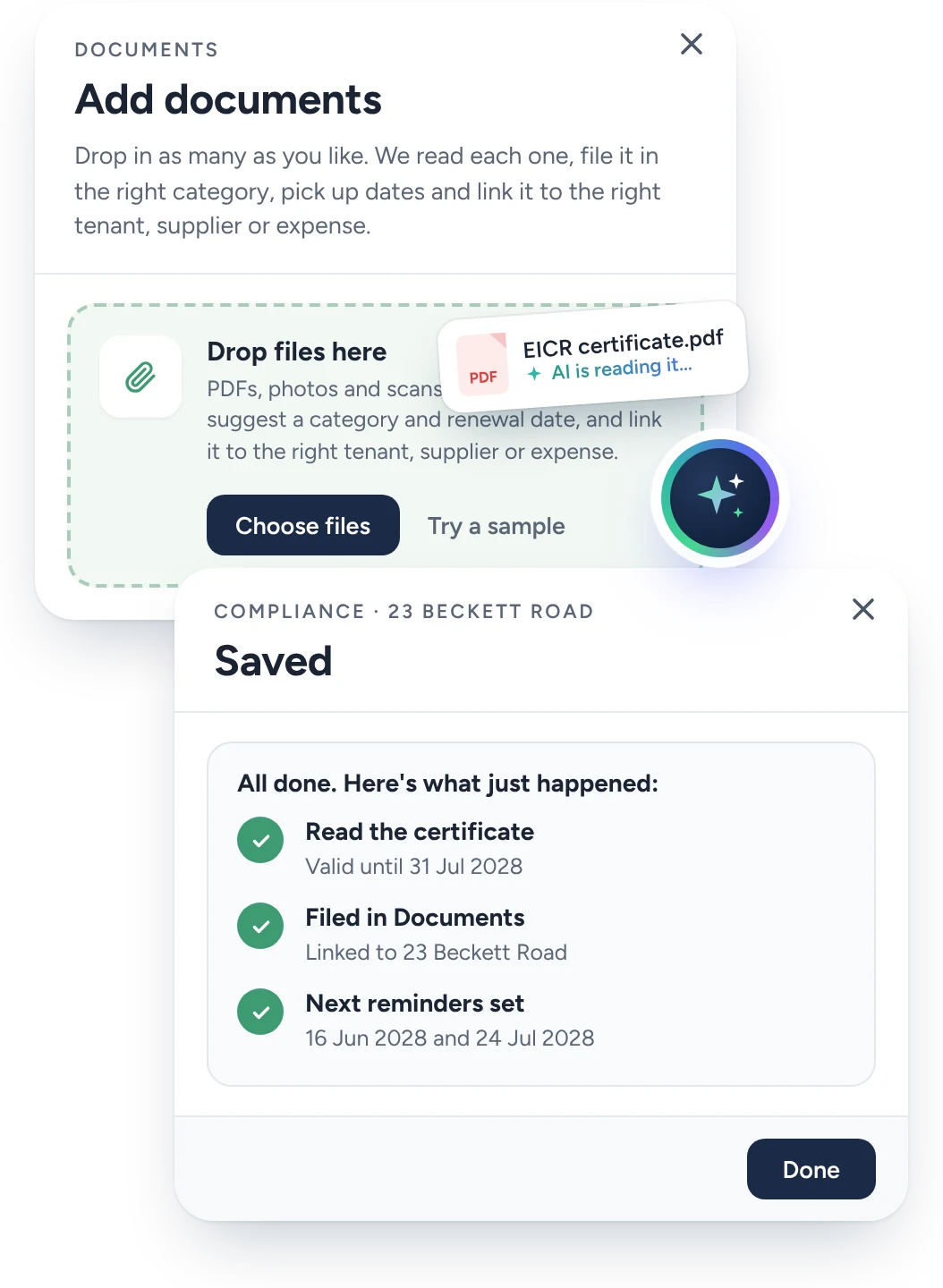
- Drop in a certificate and Alphaletz reads it. It works out what kind of document it is, picks up the expiry date, files it against the right property and sets your reminders
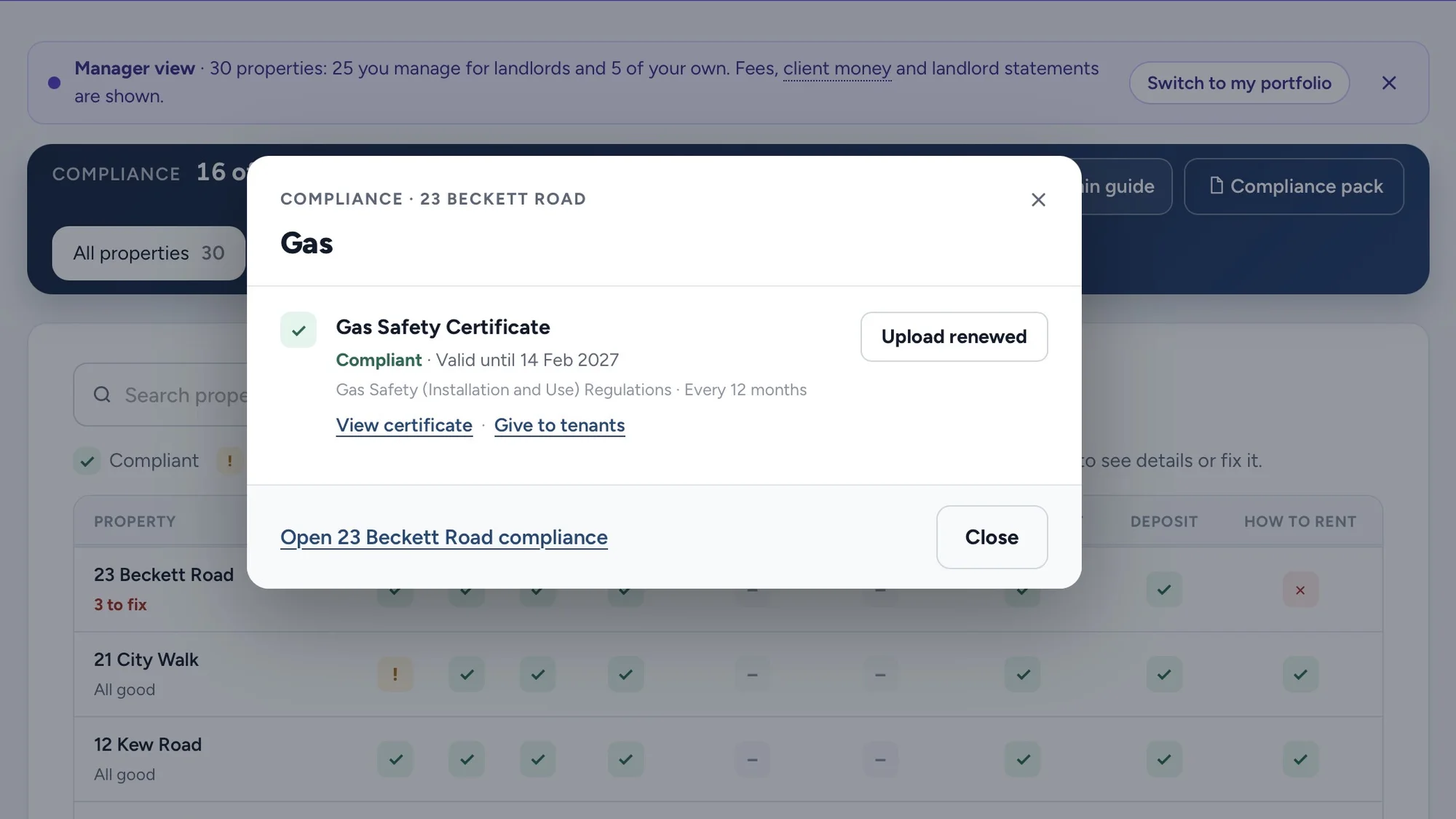
- A compliance view across every property, showing at a glance what's in date, what's due soon and what's missing
- Give tenants their copy in a click, straight from the certificate
- Send everything together in one email. Alphaletz compiles a property's certificates into a single compliance pack, so your tenants get the gas safety record, EICR and EPC in one go
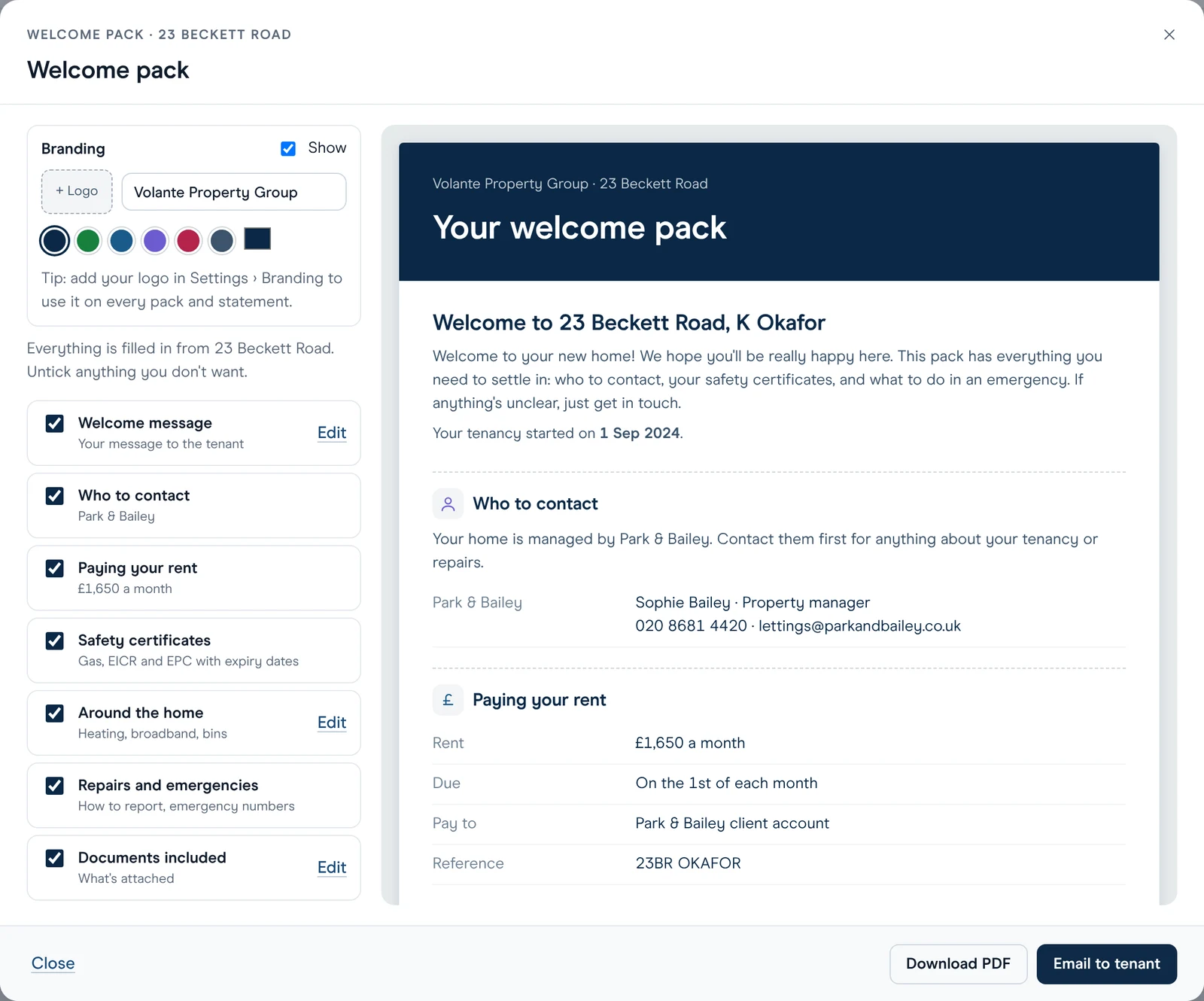
- A tenant welcome pack, filled in for you. Alphaletz builds it from the property's details: a welcome message, who to contact, paying the rent, safety certificates, around the home, repairs and emergencies, and the documents included. Untick anything you don't want, then email it or download it as a PDF
- Reminders before anything runs out, so there's time to book the engineer, plus a summary of what's coming up every Monday
- Each property's EPC rating, kept up to date automatically
- Book the checks through the Alphaletz Marketplace, where you can arrange gas safety checks, EICRs and EPCs with our trades partner
Customers report saving up to 75% of their admin time, and compliance is a big part of that.
You can try Alphaletz free for 14 days, no credit card needed.
Questions landlords ask
How often does a landlord need a gas safety certificate?
Every 12 months. You can have the check done up to two months early and keep the same renewal date.
How often does a landlord need an EICR?
At least every five years, or sooner if the last report says so.
Do I have to give my tenant copies of the certificates?
Yes. Gas safety records and EICRs go to existing tenants within 28 days of the check and to new tenants before they move in. The EPC goes to the tenant before the tenancy starts.
Do landlords need PAT testing?
Not for most single lets, but it's good practice for appliances you provide, and some HMO licences require it.
Sources
- GOV.UK: Electrical safety standards in the private and social rented sectors: guidance
- HSE: Gas safety check records and what to keep
- GOV.UK: The Smoke and Carbon Monoxide Alarm (England) Regulations 2015: Q&A booklet
- GOV.UK: Improving the energy performance of privately rented homes: consultation outcome
- Mishcon de Reya: Register your rental property service to launch in December 2026
This guide covers privately rented homes in England as of November 2026. Wales, Scotland and Northern Ireland have their own rules. It's general information, not legal advice.
Next steps
Try Alphaletz free for 14 days, no credit card needed, or if you manage 10 or more properties, book a personalised demo.